A Critical Review of the Magic Cubic Projector
 Maya ChenContributing Editor
July 24, 2026 — The market for compact projection hardware is currently flooded with upright cylinders, but the Magic Cubic Projector is shifting the design consensus toward a rotatable chassis. While most manufacturers prioritize static brightness, this hardware focuses on the physical versatility of a 180-degree hinge, a trend that is fundamentally changing how users interact with non-traditional viewing surfaces like ceilings and angled walls.
The conventional wisdom says that a projector must be fixed to a tripod or a ceiling mount to achieve a stable image. However, current industry analysis of mobile projection trends suggests that consumer demand is moving rapidly toward "lifestyle" integration, where the device adapts to the room rather than the room to the device. This shift is visible in the rise of integrated smart platforms that bypass the need for external media players, though the trade-off often involves a sacrifice in raw optical output compared to traditional long-throw units.
The Hardware Utility Assessment

Photo by Julio Lopez on Pexels
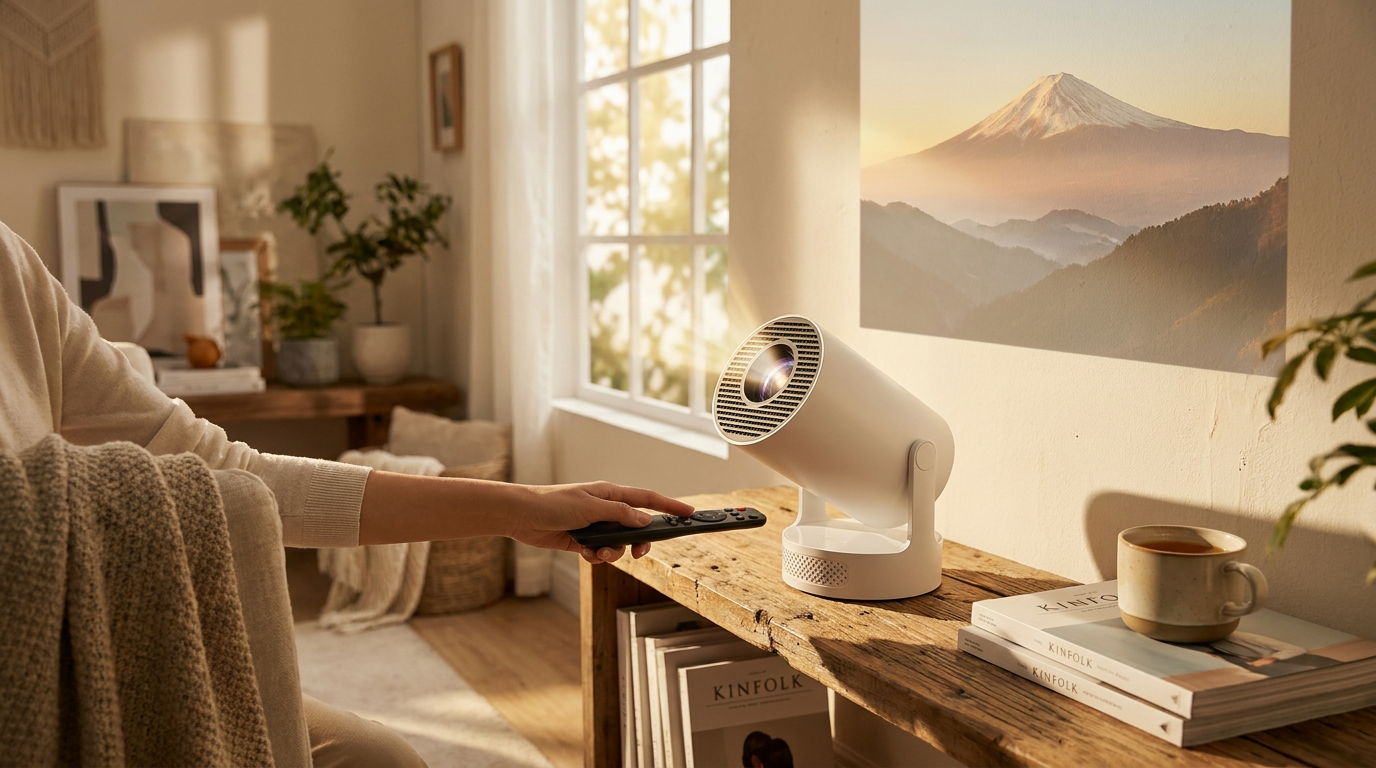
Run the math: The Magic Cubic Projector utilizes a specialized HY300 Pro architecture that supports 4K input while maintaining a native 1080P output. Here's the part nobody talks about: the efficiency of the 180-degree rotatable stand is the primary driver of value here, not just the resolution. The unit features integrated WiFi and Bluetooth connectivity, facilitating a cable-free environment that is essential for its intended portable use case. When evaluating the Magic Cubic ecosystem, the mechanical stability of the hinge becomes just as critical as the lumen count. The device employs an auto-keystone correction system that compensates for the inevitable distortion caused by its rotatable nature. Unlike standard Magiccubic iterations that may require manual adjustment, this specific model attempts to automate the geometry of the projection. For those considering a [portable smart projector for camping](/blog/magic-cubic-projector-camping-guide), the internal cooling fan noise and power draw are the metrics that define success in the field. The Magic Cubic Projector operates within a power envelope that allows for external battery operation, provided the voltage matches the hardware requirements. This portability factor is often cited as a secondary benefit, but in a market saturated with underpowered mobile units, the ability to maintain 1080P clarity at a distance of several meters remains the baseline for a functional home theater experience.
Expert tip: To maximize the lifespan of the LED light source, ensure the intake vents on the base of the Magic Cubic Projector are never placed on soft surfaces like carpets or blankets, which can cause rapid thermal throttling and dimming.
I'll change my mind when compact units can achieve 2,000 ANSI lumens without doubling their physical footprint or requiring industrial-grade cooling systems. Until then, the focus remains on how effectively these devices handle the geometry of a room.