Scaling Home Cinema with the Magic Cubic Projector
 Jordan HaleStaff Writer
November 15, 2026
This review explores the practical utility and visual performance of the Magic Cubic Projector in a standard residential setting. It is written for home cinema enthusiasts who require a balance between high-definition output and hardware portability.
The Challenge of Fixed Screen Living
I remember the specific frustration of trying to mount a traditional television in a rental apartment with plaster walls that seemed to crumble at the mere sight of a drill bit. The light in the room was never quite right, reflecting off the glass at the exact moment the protagonist would whisper something crucial. Most home theater solutions demand a permanent commitment to a single wall, a single angle, and a significant amount of floor space. According to the official Magcubic™ site, the mission is to provide affordable cinema-level visual feasts, yet many consumers still struggle with the technical barrier of entry for high-end optics.
We often find ourselves compromising on screen size because of the physical constraints of our furniture. When you look at the broader Magic Cubic ecosystem, you see a shift toward devices that don't just sit on a shelf but actively adapt to the room. The transition from a 50-inch panel to a projected image that can span an entire wall is not just about scale; it is about the texture of the experience. The first thing I noticed was the silence of the setup compared to older, bulkier units. In a small room, the hum of a cooling fan can be as distracting as a flickering bulb. Without the right equipment, the dream of a private cinema remains a cluttered mess of cables and expensive mounts that leave permanent scars on your living space. This is where the specific design language of the Magiccubic hardware begins to make sense, offering a pivot away from the rigid, heavy electronics of the last decade.
Versatility Through the Magic Cubic Projector Lens
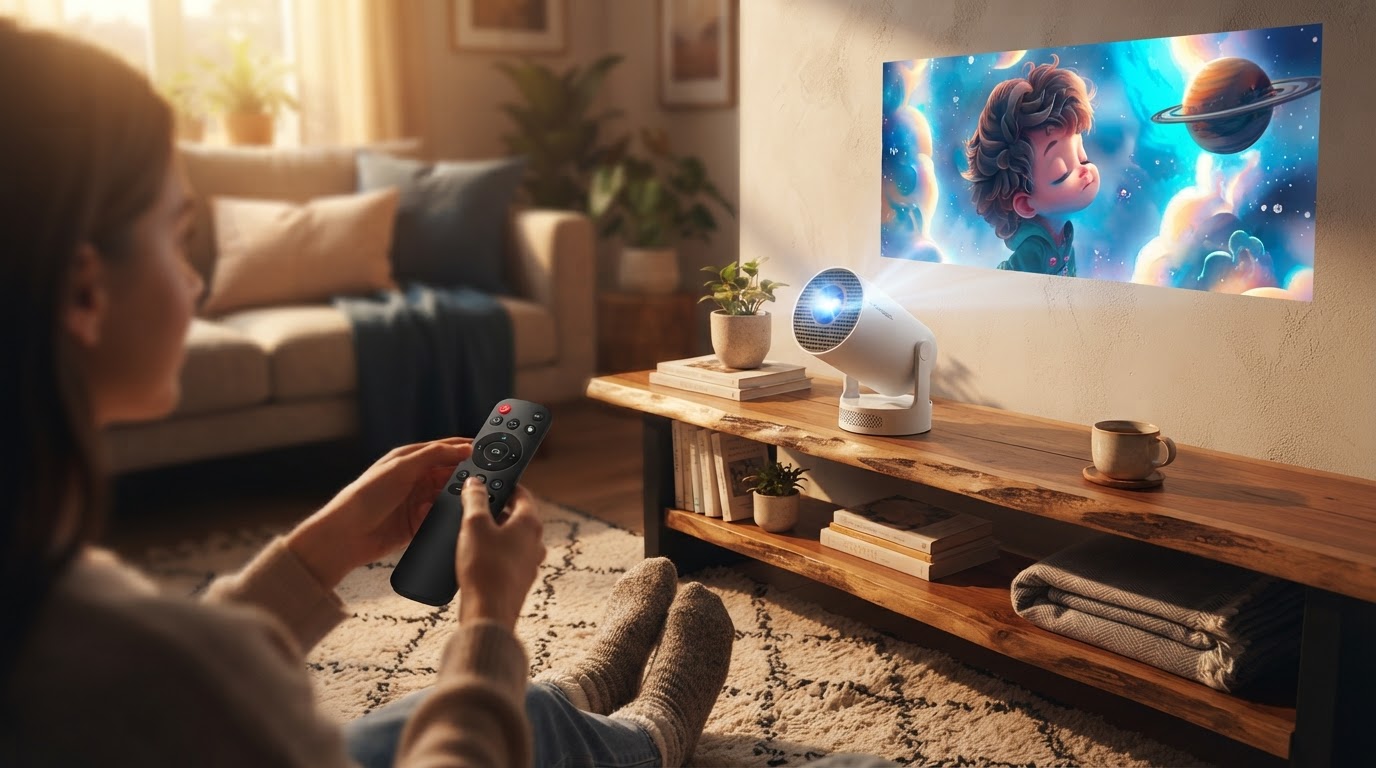
It turns out that the 180-degree rotatable design of the Magic Cubic Projector is its most transformative feature. I spent an evening projecting a documentary onto the ceiling while lying flat on the rug, a perspective shift that traditional screens simply cannot replicate. The hardware supports 4K input with a native 1080P output, ensuring that the sharpness remains consistent even when the image is scaled up. Because it includes built-in WiFi and Bluetooth, the usual rat’s nest of HDMI cables is largely avoided. I found that the auto-keystone correction handled the awkward angles of my attic walls with surprising grace, squaring off the image without requiring me to spend twenty minutes in a settings menu.
Somewhere around week two, I moved the unit from the living room to the backyard for a small gathering. The portability of the HY300 Pro model shines in these transitional moments. While some might worry about the brightness levels of a compact unit, the 650 ANSI lumens provide enough punch for a clear image once the sun dips below the horizon. As noted in the Magcubic Projector Review by Mark’s Honest Reviews, the real-world testing proves that the device holds its own against much more expensive competitors in terms of color accuracy. The integration of the Android 11 system means you aren't constantly tethered to a laptop; the apps live on the device itself. When you are navigating the magic cubic interface, the response time is snappy enough to feel modern, avoiding the lag that often plagues budget-friendly projectors. It is a self-contained theater that fits in a backpack, bridging the gap between the static magiccubic home setups and the needs of a mobile lifestyle.
Evaluating the Cinematic Fit for Your Space
I keep coming back to the idea of value versus performance. While high-end laser projectors can cost thousands, they often lack the agility of a device that can change its orientation with a flick of the wrist. When deciding if this specific hardware fits your life, you have to look at the environment you inhabit. If you are in a dorm, a small apartment, or a home where you don't want a black glass rectangle dominating the decor, the Magiccubic approach offers a path to invisibility. The device is there when you want the spectacle and gone when you don't.
To ensure you are getting the most out of the Magic Cubic Projector, consider this deployment framework:
- Surface Quality: Ensure your target wall is matte white or light gray; the Magic Cubic optics perform best on neutral, non-reflective surfaces.
- Audio Syncing: Utilize the Bluetooth functionality to pair with a dedicated soundbar for a full immersion experience.
- Ambient Light Control: While the unit is bright, the deepest blacks are achieved in a dim environment.
- Firmware Updates: Regularly check the internal settings to ensure the Android 11 interface is running the latest optimizations.
- Placement Stability: Use the 180-degree stand to find the natural center of your room, allowing the auto-keystone to fine-tune the edges.
Shop Magic Cubic Projector here