Evaluating the Magic Cubic Projector for Mobile Beam Use
 Priya RamanSenior Analyst
August 8, 2026 — The shift toward flexible living spaces has accelerated the demand for the Magic Cubic Projector as a primary portable smart beam solution. While traditional hardware remains tethered to static mounts, modern users prioritize devices that integrate seamlessly into diverse environments. According to recent market analysis from the International Data Corporation, the growth in the portable projection sector is driven by the convergence of standalone operating systems and hardware miniaturization. This shift necessitates a new framework for evaluating how these devices perform outside of a controlled home theater environment.
The Three-Axis Mobility Framework

Photo by SplitShire on Pexels
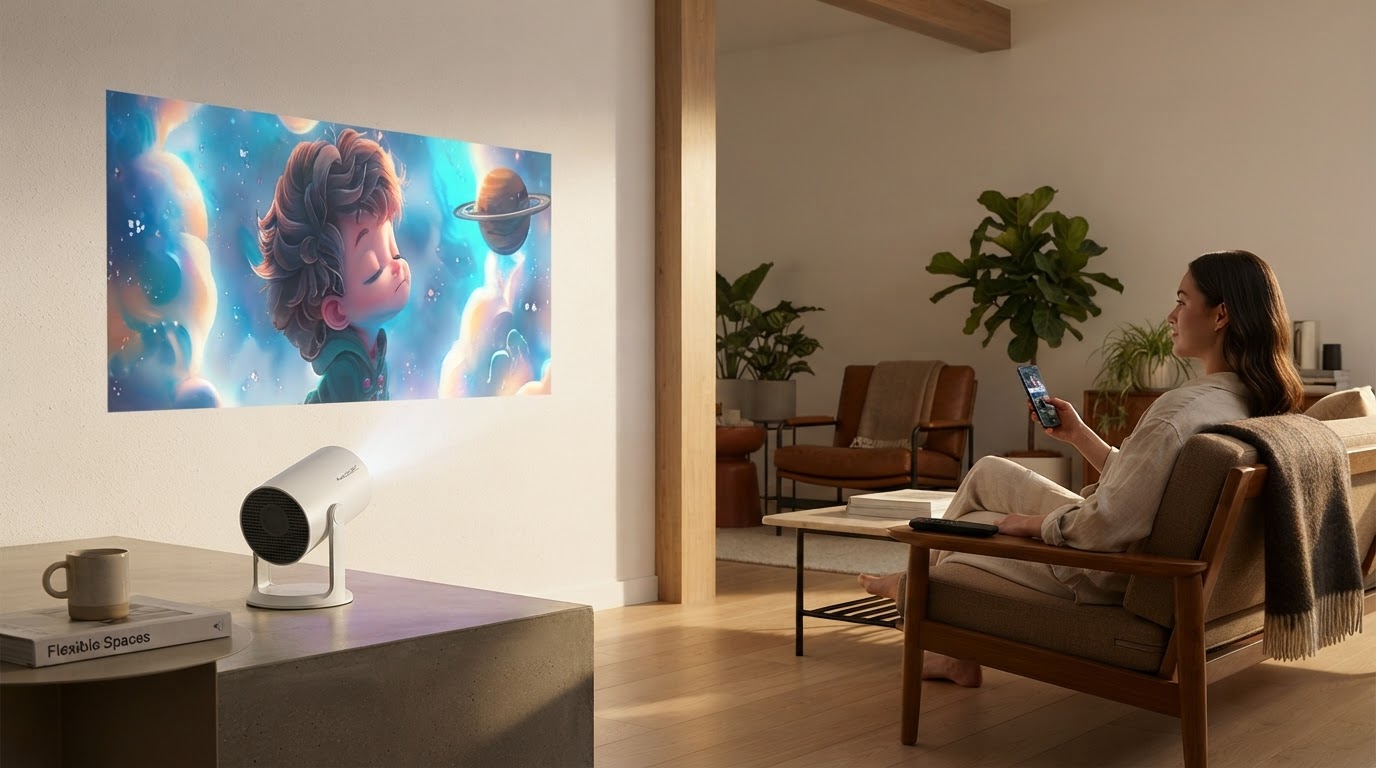
To understand the utility of the Magic Cubic Projector, think of it as a matrix of three critical performance axes: physical agility, software autonomy, and visual correction. Two axes matter here most when transitioning from a living room to a temporary setup: the physical rotation capability and the internal processing power. The Magic Cubic Projector addresses these through its 180-degree rotatable design, which allows the beam to transition from a wall to a ceiling without requiring external tripod adjustments. This physical agility is paired with 4K support and 1080P native resolution, ensuring that the increase in portability does not result in a significant degradation of image fidelity. The third axis, software autonomy, is managed via the integrated Android 11 system, which removes the need for external media players. When assessing a magiccubic setup, the decision rule is simple: the device must function as a self-contained ecosystem. The inclusion of dual-band WiFi 6 and Bluetooth 5.0 ensures that the "smart beam" designation is earned through connectivity rather than just basic projection. This combination of auto-keystone correction and a high-speed wireless stack allows the unit to adapt to uneven surfaces or varying throw distances instantly. Once you see it this way, the distinction between a simple peripheral and a smart beam projector becomes clear, as the latter maintains a consistent user experience regardless of the physical backdrop.
Expert tip: Use the 180-degree hinge to project onto a white ceiling while lying down; this specific orientation reduces neck strain and takes advantage of the auto-keystone correction to maintain a perfectly rectangular aspect ratio without manual calibration.
This level of flexibility makes it an ideal [compact phone projector for camping](/blog/magic-cubic-projector-camping-setup) where traditional flat surfaces are rarely available. The integration of the magiccubic software allows for offline content management, which is essential for a magic-cubic-projector-camping-setup. By utilizing the magiccubic interface, users can bypass the complexities of traditional cable-heavy configurations.