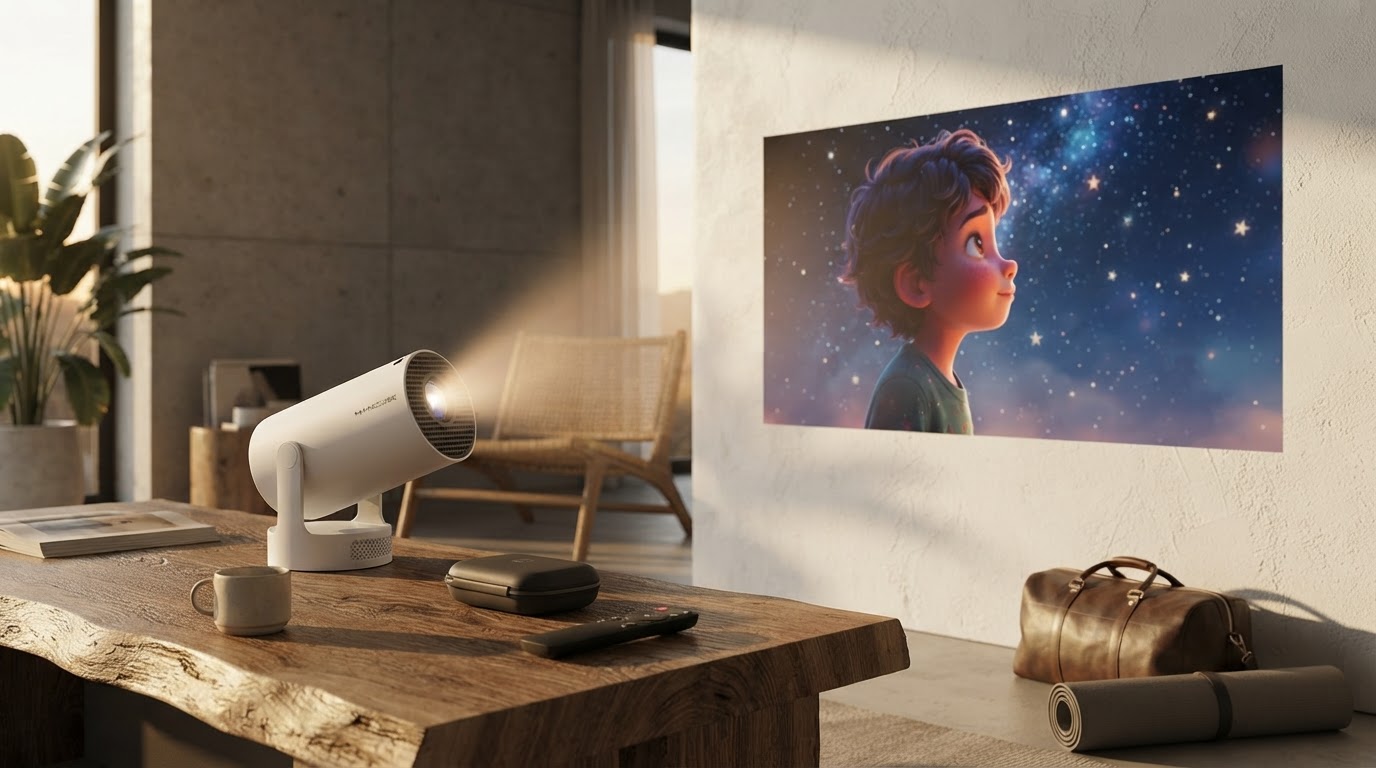
Adapting the Magic Cubic Projector to Modern Living Spaces
July 31, 2026. This analysis explores the architectural and technical integration of the Magic Cubic Projector into diverse environments. It is intended for homeowners and frequent travelers seeking a balance between high-fidelity visual output and physical portability. To evaluate this hardware effectively, one must consider it through a matrix of spatial constraints and connectivity requirements. Two axes matter here: the physical versatility of the hardware and the software-driven ease of deployment.
The Shift Toward Modular Entertainment Environments
The traditional home theater model relied on fixed installations, often requiring dedicated rooms and permanent mounting solutions. This hardware-heavy approach is increasingly at odds with the fluid nature of modern living, where a single room might serve as an office, a gym, and a cinema within the same twenty-four-hour cycle. The challenge lies in maintaining a high-quality visual experience without the clutter of cables and the rigidity of ceiling mounts. Many consumers find themselves forced to choose between a bulky television that dominates the room's aesthetic or a low-quality portable device that fails to deliver a cinematic feel. This tension creates a need for devices that can pivot as quickly as the user's schedule. In a broader context, the rise of nomadic lifestyles has increased the demand for hardware that transitions from a living room to a campsite without loss of function. As noted by industry observers, the expectation for "plug-and-play" functionality now extends beyond simple software to include the physical orientation of the device itself. This is why a critical review of the Magic Cubic Projector is necessary to understand how it bridges the gap between these two worlds. For those moving beyond the fixed-screen era, the goal is a device that adapts to the wall, not a wall that adapts to the device.
Technical Integration and Spatial Flexibility
Photo by Hc Digital on Pexels
The Magic Cubic Projector addresses these environmental challenges through a combination of 180-degree physical rotation and automated software correction. Unlike traditional projectors that require precise manual leveling, this hardware utilizes an auto-keystone feature to square the image against uneven surfaces. This capability is central to why the Magic Cubic Projector is becoming a preferred choice for non-traditional spaces. The hardware supports 4K decoding and 1080P native resolution, ensuring that the image quality remains sharp even when projected at unconventional angles. Once you see it this way, the projector stops being a static appliance and becomes a dynamic utility. The inclusion of WiFi and Bluetooth connectivity further reduces the physical footprint by eliminating the need for external media players or tethered audio systems. This is particularly relevant when optimizing the Magic Cubic Projector setup, as the internal Android-based operating system allows for direct streaming. The 180-degree rotatable design means the ceiling becomes a viable projection surface, which is a significant advantage for small apartments or bedrooms where wall space is occupied by furniture. This flexibility is what defines the Magic Cubic experience, allowing the user to transform any flat surface into a high-definition display. Whether it is used as a portable smart projector for camping or as a primary screen in a studio apartment, the technical specs support a high degree of adaptability.
A Framework for Environmental Selection
Photo by https://kaboompics.com/ on Pexels
When determining if this hardware fits a specific use case, the decision rule focuses on the frequency of movement versus the requirement for fixed brightness. The Magic Cubic Projector excels in environments where the user values the ability to relocate the screen at a moment's notice. Before finalizing an installation or purchase, users should evaluate their space against a specific set of criteria to ensure optimal performance. This involves measuring ambient light levels and identifying the primary projection surfaces available in the home or on the road. Understanding the Magic Cubic Projector's strengths in portability helps in making an informed choice compared to heavier, stationary alternatives. To assist in this evaluation, consider the following checklist:
- Surface Versatility: Does the intended room have at least one light-colored flat surface, or will a portable screen be required?
- Connectivity Range: Is the local WiFi network stable enough to support high-definition streaming directly through the projector's interface?
- Audio Requirements: Will the internal Bluetooth sufficiently pair with existing soundbars, or is the built-in speaker adequate for the room size?
- Pivot Utility: How often will the 180-degree rotation feature be used to project on ceilings or angled walls?
- Power Access: Is there a reliable power source within reach of the desired setup point, especially when selecting a Magic Cubic Projector for remote camping?
- Content Sourcing: Are the preferred streaming applications compatible with the onboard smart system?
Shop Magic Cubic Projector here