Choosing Between Magic Cubic Projector and Portable Rivals
 Sam VasquezBuying Guide Lead
September 30, 2026 — The market for compact home cinema has shifted toward ultra-flexible hardware, putting the Magic Cubic Projector at the center of discussions regarding affordable high-definition setups. As more users look to replace traditional television sets with versatile projection, understanding how these units perform in real-world environments is essential for a smart purchase.
I have seen a lot of hardware come through my studio, and the current trend favors devices that balance software integration with physical adjustability. According to a detailed Magcubic HY300 Review by Mark's Honest Reviews, the hardware offers a surprisingly capable entry point for those seeking cinema-level visual feasts without the typical four-figure investment. The primary draw for most buyers is the combination of the 180-degree rotatable stand and the built-in Android operating system, which streamlines the transition from unboxing to streaming.
The Three-Point Value Assessment
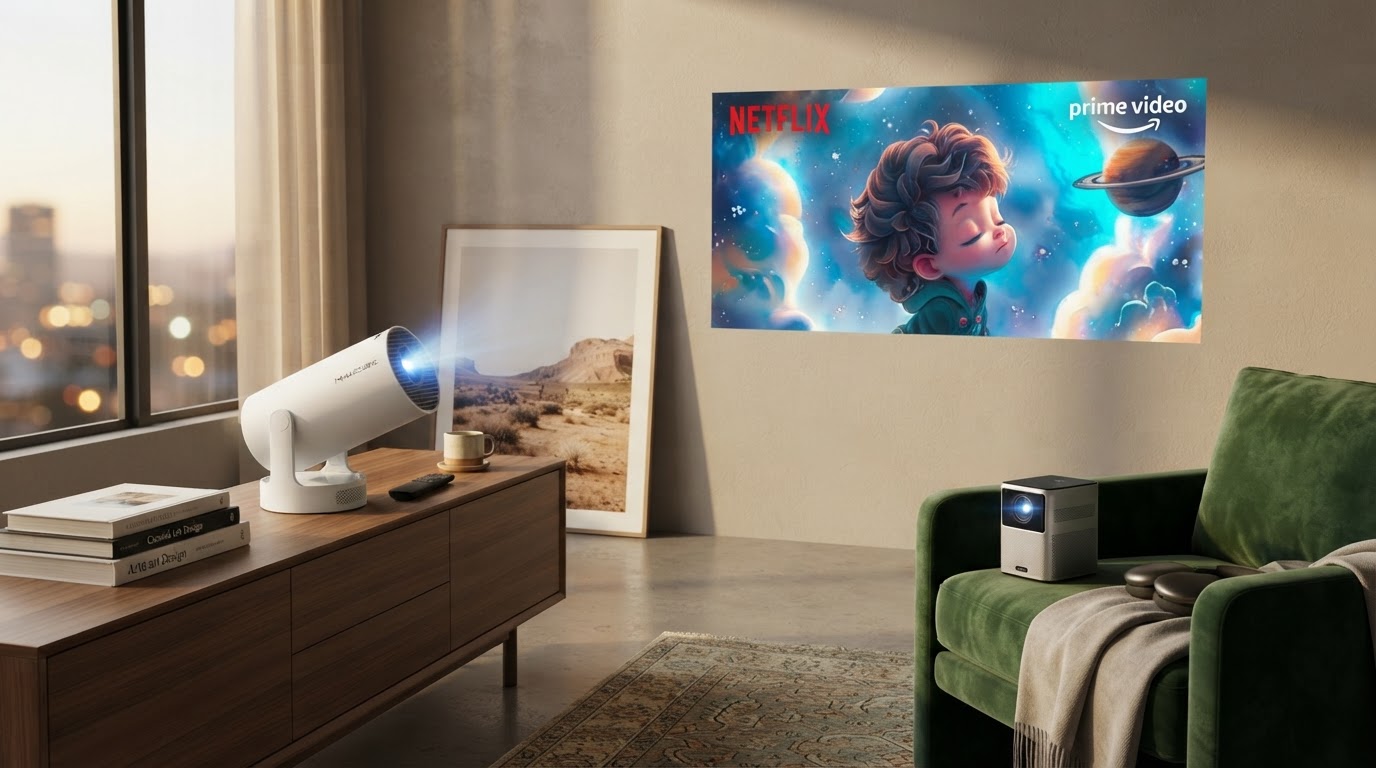
When I evaluate the Magic Cubic Projector against other entry-level portable units, I look at three specific pillars: light output, software stability, and physical versatility. The HY300 Pro model delivers 260 ANSI Lumens, which is a critical distinction to make. Many generic competitors claim thousands of "marketing lumens," but the 260 ANSI rating is the honest figure you need to know. It means this unit is designed for darkened rooms or evening use, not for high-ambient light living rooms at midday. If you are looking for a device that can handle a 130-inch screen in a basement or bedroom, this hits the mark. Between these two categories of projectors—the ultra-bright stationary units and the portable rotatable ones—I’d go with the Magic Cubic Projector for any scenario involving a bedroom or a small apartment. The 180-degree rotation is not a gimmick; it allows you to project onto a ceiling while lying in bed without needing a stack of books to angle the lens. This physical flexibility is often missing in standard box-shaped projectors that require a tripod for similar angles. Furthermore, the support for 4K decoding and native 1080P output ensures that your high-resolution streaming subscriptions aren't wasted on a sub-par resolution, a common pitfall in the budget sector.
Expert tip: To get the most out of the 260 ANSI Lumens, focus on your wall texture. Since this unit features auto-keystone correction, you can project at odd angles, but using a dedicated high-gain screen or a flat white wall will significantly improve the perceived contrast compared to colored or textured surfaces.
If you're on a budget, this is one of the few ways to get a functional Android-based smart system without adding the cost of an external streaming stick. However, skip this if you intend to use it as your primary daylight television in a room with floor-to-ceiling windows and no curtains. You can learn more about what are the key features of the Magic Cubic Projector to see if the internal specs match your specific media library. For those planning a more permanent installation, optimizing home cinema layouts with Magic Cubic Projector provides the necessary spatial calculations. I've found that the magic cubic remains the most practical choice for students and renters who move frequently. Here’s what I’d actually buy: the HY300 Pro version, specifically for its improved wireless stability over the base model. It simplifies the setup process significantly for the average user.
Sources
- Magcubic™—Your Top Choice for Premium Projectors
- Magcubic HY300 Review: Is a $35 "4K" Video Projector Any Good?
- Magcubic Projector Review (Real Test + Honest Opinion) - YouTube